

Concrete reads differently than any other planter material — it has weight, a matte surface that catches light without shining it back, and a coolness that plays well against green. Here's how we place it around our own studio and homes.
The biggest mistake people make with concrete planters is treating them like an afterthought — something to hide behind the plant rather than a piece that carries its own weight in a room. Concrete wants to be seen. These five approaches are the ones we come back to most often, whether we're styling a single windowsill or a whole entryway.
01Cluster by height on a windowsill
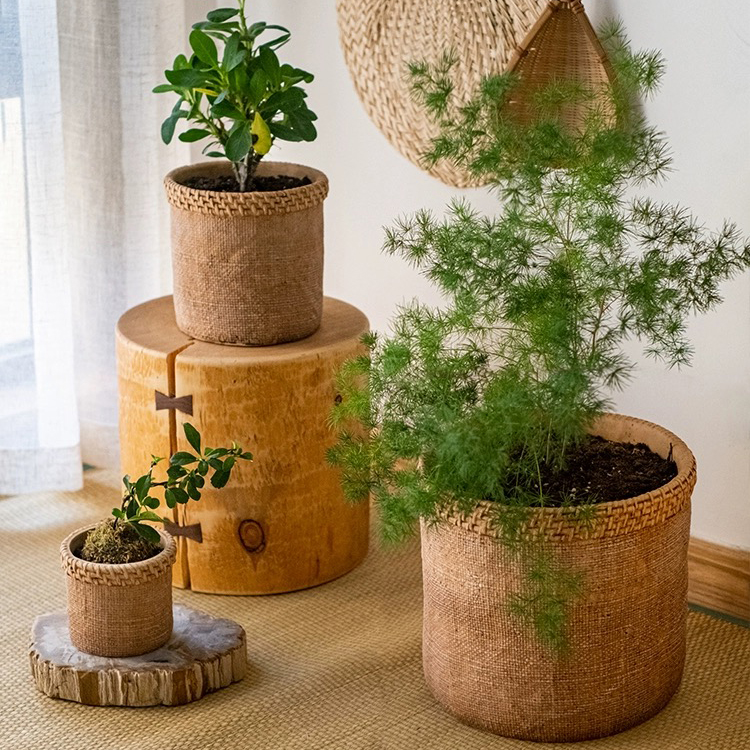
A single planter on a sill tends to disappear into the frame. Three does the opposite. Group planters in a short-medium-tall sequence, keeping the gaps between them tighter than feels natural at first — an inch or two, not a hand's width. The eye reads a tight cluster as one composition instead of three separate pots, and the height variation gives it a skyline silhouette that catches the light differently through the day.
02Anchor a corner with a floor planter
Every room has a corner that never quite resolves — too small for furniture, too awkward to leave bare. A tall floor planter is one of the few things that solves it without adding clutter, because it reads as architecture rather than furniture. Choose a piece with real presence: our Tall Floor Planter at 42cm holds its own even next to a sofa or bookshelf, and its charcoal finish keeps it from competing with whatever plant you put in it.
"Concrete wants to be seen — treat it as the piece that carries the room, not the thing you hide behind the plant."
03Mix finishes within one grouping
This runs counter to the windowsill rule above, and that's the point — it works at a larger scale. On a console table or shelf, pairing a raw matte planter with a sand-finished one adds depth without adding color. The contrast is textural rather than chromatic, so the grouping still feels calm even though no two pieces match exactly.
04Let a single piece stand alone on a console
Not every planter needs company. A sculptural piece — something with a distinct silhouette rather than a straight cylinder — earns the right to sit by itself on a console or side table, with nothing else nearby to divide attention. This is where we'd reach for the Nesting Planter Trio's largest piece on its own, or a single Tall Floor Planter scaled down to tabletop size.
05Use trays to unify a shelf
When a shelf carries several small planters alongside books or objects, a fluted concrete tray does what a rug does for a living room — it draws a boundary around the grouping and tells the eye where the arrangement starts and ends. It also protects the shelf itself from watering marks, which matters more than most styling guides admit.
None of these ideas require buying more than you already have. Start with the cluster or the console piece, live with it for a week, and adjust from there — concrete is patient material, and it rewards small, considered changes over a full room reset.