
It's tempting to size a pot by how it looks with the plant in the shop. In practice, the size that keeps a succulent healthy is almost always smaller than the size that looks generous — and getting this right matters more than the finish or color you choose.
Succulents evolved to survive in shallow, fast-draining soil, and their root systems reflect that — wide and shallow rather than deep. A pot that's oversized for the plant holds onto damp soil for far longer than the roots need, which is the single most common reason a healthy succulent starts to decline after repotting.
01Why drainage matters more than looks
A beautiful pot with no drainage hole and too much soil volume is, from the plant's perspective, a bucket that never fully dries out. Succulent roots rot in consistently damp soil far faster than they suffer from being slightly cramped. If you fall in love with a pot that has no drainage hole, use it as a decorative outer sleeve and keep the plant in its original nursery pot inside.
02Rule of thumb: root ball to pot ratio
A good starting point is a pot that's roughly 1–2 inches wider in diameter than the plant's current root ball, not the diameter of its leaves. Succulents often look much smaller than the pot they actually need once you account for the leaf spread, so it helps to gently ease the plant out of its nursery pot and measure the root ball itself before choosing a new home.
| Plant size | Root ball (approx.) | Suggested pot Ø |
|---|---|---|
| Small rosette (echeveria, haworthia) | 2–3" | 3–4" |
| Medium succulent | 3–4" | 4–6" |
| Trailing (string of pearls, etc.) | 3–5" | 5–7" |
| Small cluster or arrangement | varies | 7–10" |
03Signs a pot is too big or too small
A pot that's too large will keep soil damp days after watering, and you may notice soft, translucent, or yellowing lower leaves — early signs of root rot. A pot that's too small dries out unusually fast, and you'll often see roots pressing against or emerging from the drainage hole. Both are fixable, but it's easier to size correctly the first time than to catch and correct either extreme.
"A slightly snug pot is far easier to correct than an oversized one that's already caused root stress."
04Repotting cadence
Most succulents only need repotting every 12–24 months, and mainly because they've outgrown the pot rather than because the soil has "worn out." Check root growth once a year by gently lifting the plant — if roots circle the base tightly or emerge from the drainage hole, it's time to size up by roughly one inch, not more.
05Matching pot material to succulent needs
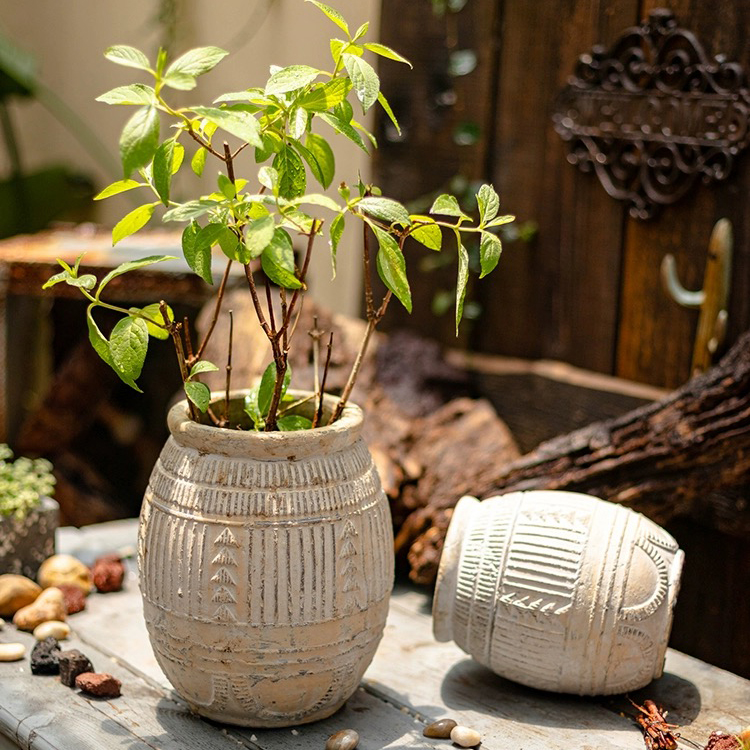
Unglazed concrete and terracotta both let moisture evaporate through the pot walls, not just the soil surface, which suits succulents well — it's a built-in safeguard against overwatering. This is one of the practical reasons concrete works so well for succulents beyond how it looks: the material itself is doing some of the plant care for you.
Getting the size right is the least glamorous part of styling with succulents, but it's the part that actually keeps them alive long enough to enjoy the styling.