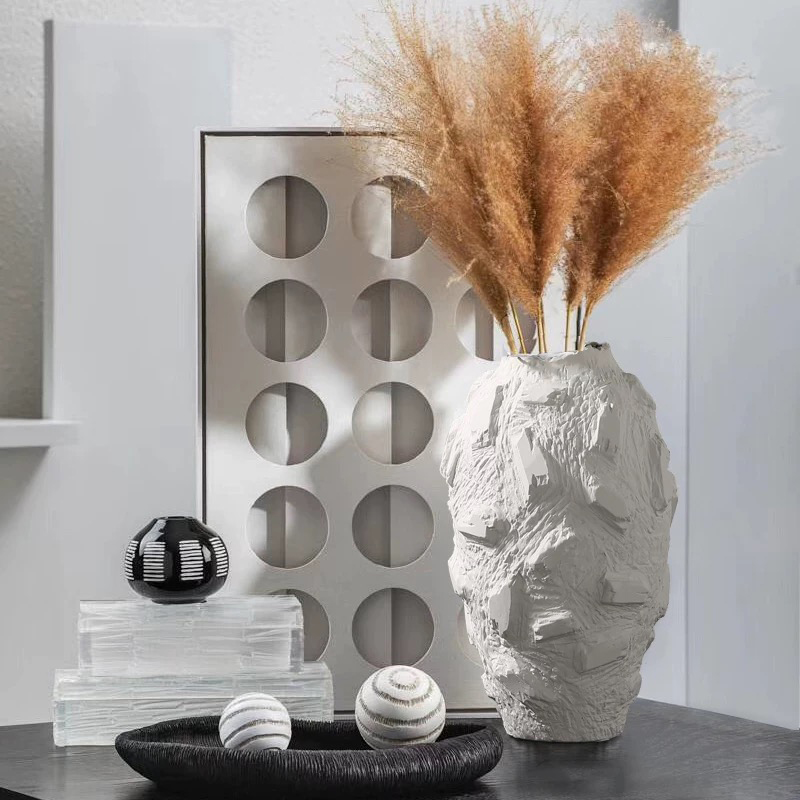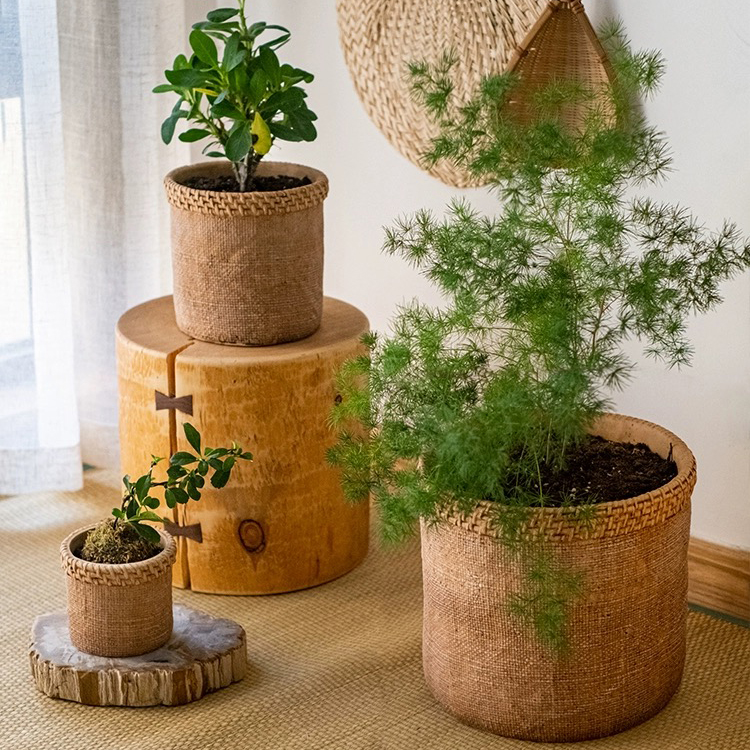

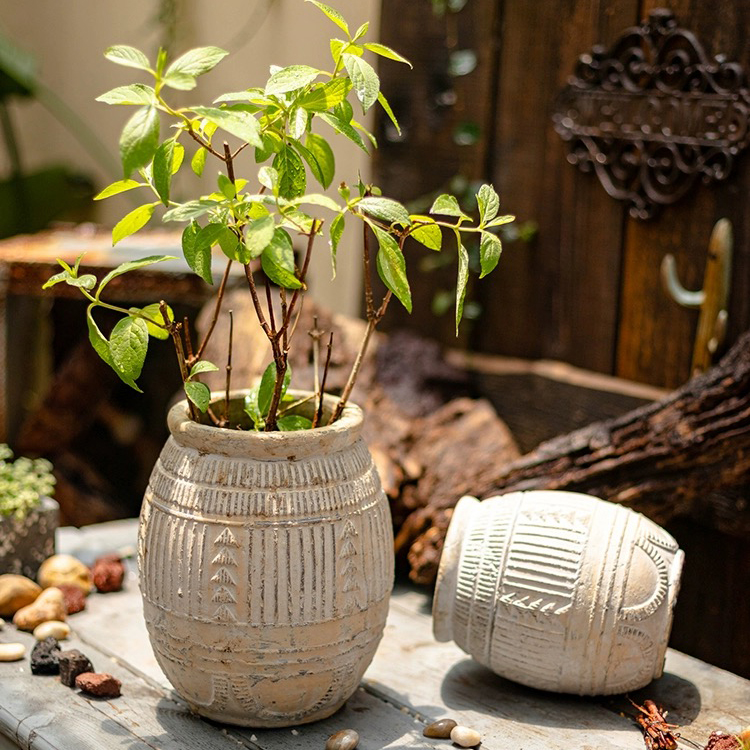
Raw concrete and hand-painted ceramics come from different parts of the studio, but they don't have to stay in different rooms. The two finishes actually complement each other — as long as you give the pairing some structure.
The risk with mixing finishes isn't that they'll clash outright — it's that a grouping with no shared logic starts to look like it was assembled by accident rather than by choice. A few simple rules keep a mixed grouping feeling curated instead of cluttered.
01Start with one dominant finish
Pick either matte concrete or painted ceramic as the majority material in a grouping — roughly two-thirds to three-quarters of what's on display — and let the other finish appear in smaller doses. A shelf of five pieces reads as intentional with four concrete and one painted accent; split evenly down the middle, it starts to look like two separate collections pushed together.
02Use color to bridge the two
Concrete's natural palette sits in warm greys, sand, and charcoal. When choosing a painted piece to sit alongside it, look for a glaze that shares at least one of those undertones rather than introducing an entirely new color family. A sage or terracotta glaze bridges the two materials far more easily than a bright primary would.
"A grouping with no shared logic starts to look like it was assembled by accident rather than by choice."
03Group by texture, not just color
Two pieces can share a color palette and still feel disconnected if their textures are worlds apart — a high-gloss glaze next to raw matte concrete will always read as a contrast, even in matching tones. If you want the grouping to feel cohesive rather than deliberately contrasted, favor painted pieces with a satin or eggshell finish over a full gloss.
04Where painted pieces work best
Save your painted or more decorative pieces for spots where they'll be seen as a focal point rather than folded into a larger grouping — a single hand-painted holiday pot on an entry table, for instance, rather than mixed into a windowsill cluster of five. Isolation gives a painted piece room to be the accent it's meant to be, instead of competing for attention.
05A simple 3-piece formula
If you're starting from scratch and want a foolproof combination, this formula rarely fails:
(same finish family) + 1 painted accent
(shared undertone) = a grouping that reads
as one collection
Once that base combination feels settled, it's easy to build outward — add a second painted piece once you've confirmed the color relationship works, or introduce a third concrete texture for depth. The formula isn't a limit, just a stable place to start.